

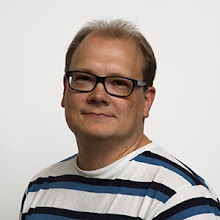
This course was very useful for me and opened my eyes for many new things. Firstly course consisted of many relevant topics of OER. There were both philosophical and practical parts. I liked both of them. Philosophical parts like OER's history, background and copyrights were challenging and provided critical viewpoints for my conventional thoughts. However viewpoints also supported my own opinions and confirmed them e.g. development of copyrights. Every topics included illuminated examples, which support my understanding.
Practical part, pictures, audios and videos making and sharing were hard, but same time so fun ;-) In my case I needed more time than a week to do these assignments. I learnt so many things and I had never guessed at this is so easy. There were so many useful tools in web. Thanks for good links and examples. The course was the best of them, which I have learnt. I got many good ideas for my own projects, e.g. I will do two courses by using open educational resources and I try to get some funding to implementation. Thanks for all study colleagues. You gave me constructive feedback and useful tips. I hope that I can give you my comments before long. Thanks for Teemu and Hans. You have designed excellent course, which provides many thoughts and memorable experiences.
Showing posts with label definition of OER. Show all posts
Showing posts with label definition of OER. Show all posts
May 15, 2008


Mar 5, 2008
OER - What is this?
Ilkka Tuomi's report describes and defines concept of OER. In the report he clarifies the concept and highlights that definition depends on its use. Still I was expecting that he would have used more definitions than the UNESCO definition. Maybe this definition is accredited generally. Actually by doing some internet searches I found out that the term OER was first adopted at UNESCO's Forum. The searches were useful, I found other suitable definitions like OER dgCommunity's definition: "OER is digitized materials, offered freely and openly for educators, students and self-learners, to use and re-use for teaching, learning and research. It includes open access to both the content and the technology to distribute the material." You will find this definition from a nice introduction booklet and free Webinars http://cedict.blogspot.com/2007/11/oer-introduction-booklet-and-free.html
To my annoyance I haven't got to grips with the UNESCO definition, but in reading this other one I realized that I have done this in my early online courses by adding Youtube videoclips, using digital archives etc.
Figure 5 opens well to me what kind of things can belong to OER. I get it that OER provides so many opportunities for educators and learners if OER is open and free. OER promotes educational equality and connects people. Learning can happen in everywhere. It is clear that educators' role will be changed.
In my opinion Tuomi has successfully perceived both technical and social dimensions of OER. Without open sources and their openness this kind of OER distribution wouldn't have happened. Now almost everyone can find and share suitable learning material, tools, archives etc. Learning is moving beyond schools and other institutions. What this will mean in future?
Tuomi has also distinguished three levels of openness. These levels fascinated me. In my opinion levels were describing also technical skills. The UNESCO has published World Report: Towards Knowledge Society where is wrote: "We have seen that the existence of different ways of gaining access to knowledge is one of the major characteristics of learning societies." I think that OER is one of the major characteristic of learning society.
To my annoyance I haven't got to grips with the UNESCO definition, but in reading this other one I realized that I have done this in my early online courses by adding Youtube videoclips, using digital archives etc.
Figure 5 opens well to me what kind of things can belong to OER. I get it that OER provides so many opportunities for educators and learners if OER is open and free. OER promotes educational equality and connects people. Learning can happen in everywhere. It is clear that educators' role will be changed.
In my opinion Tuomi has successfully perceived both technical and social dimensions of OER. Without open sources and their openness this kind of OER distribution wouldn't have happened. Now almost everyone can find and share suitable learning material, tools, archives etc. Learning is moving beyond schools and other institutions. What this will mean in future?
Tuomi has also distinguished three levels of openness. These levels fascinated me. In my opinion levels were describing also technical skills. The UNESCO has published World Report: Towards Knowledge Society where is wrote: "We have seen that the existence of different ways of gaining access to knowledge is one of the major characteristics of learning societies." I think that OER is one of the major characteristic of learning society.
Subscribe to:
Posts (Atom)